WHY POSTING WITHOUT A STRATEGY IS JUST NOISE — AND THE TWO FRAMEWORKS SMALL BUSINESSES ACTUALLY NEED
Most small business owners know they should be creating content. Very few of them know why it isn't working.
The answer is almost always one of two things: no framework, or not enough reps. Usually both.
The expectation problem
Content marketing is not a faucet. You don't turn it on and watch leads pour out the next week. For most businesses it takes six months to a year before content starts producing real results — and that timeline assumes you're posting consistently the entire time.
The businesses that give up after a month aren't failing because their content is bad. They're failing because they never gave it a chance.
A young sales rep at a trucking company told me recently he'd been posting videos about trucks on Facebook and getting zero leads. He was ready to write off content entirely.
I asked him how many videos he'd posted.
Four or five.
That's not a sample size. You need dozens of posts before you have enough data to even evaluate whether something is working. The rep wasn't failing at content. He hadn't started yet.
The two frameworks that actually work
Once you commit to the long game, you need a system. There are two worth knowing.
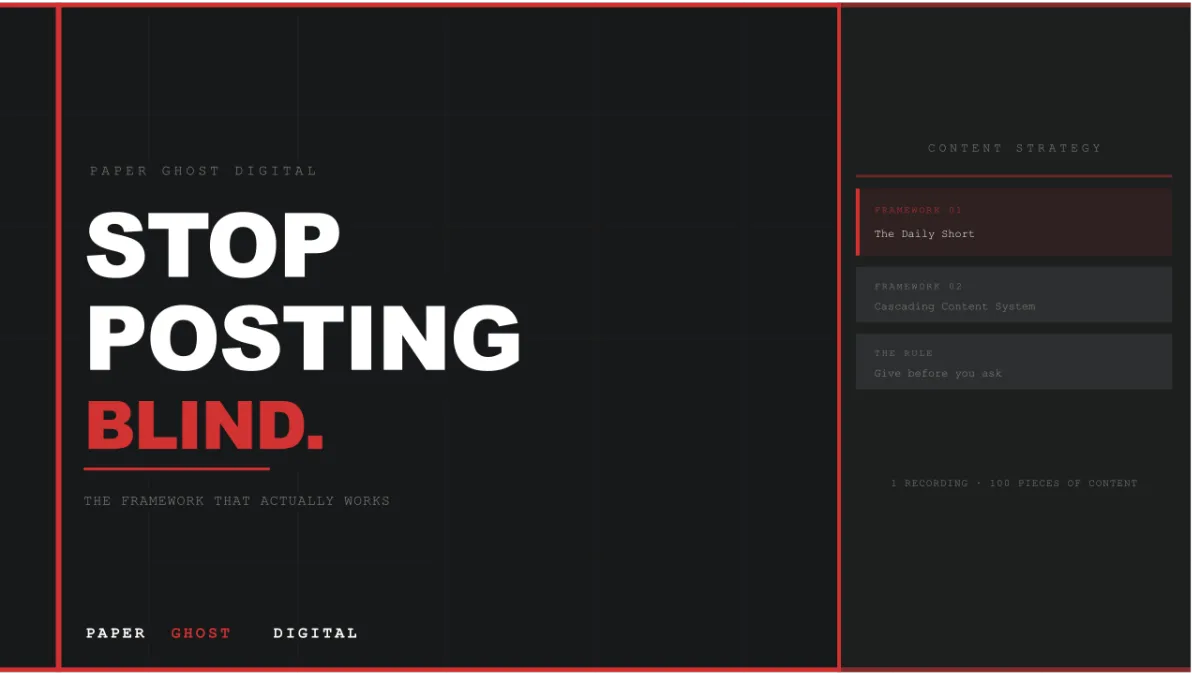
Framework 1: The Daily Short
This is the starting point for most small businesses. The concept is simple: record one short video every day and post it everywhere.
Sixty seconds. A tip, a walkthrough, a quick thought relevant to your business. Edit it lightly — this isn't a production, it's a rep. Then post it to every platform you have. Facebook, Instagram, YouTube, TikTok, LinkedIn. That's five or six platforms from a single piece of content.
Do that for 100 days and you have 600 posts across those platforms. From one video a day that probably takes 15 minutes to produce.
That's your sample size. That's when you start seeing what resonates, which platforms perform, and what your audience actually responds to.
Framework 2: The Cascading Content System
This is the framework the biggest personal brands in the world use. Gary Vee does this. Alex Hormozi does this. Any major brand with a content engine does some version of this.
It starts with a video podcast. One hour of recording per week — you, a co-host, a guest, whatever makes sense for your business.
From that single recording session, here's what you can produce:
One full-length YouTube video. Strip the audio and you have a podcast for Spotify and Apple. Cut the hour into five long-form clips — one per weekday — and you have a week's worth of YouTube content from a single session. Pull the transcripts from those clips and run them through an AI tool and you have five articles for your blog, LinkedIn, or Substack. Cut the long clips into 60-second shorts and schedule them across every platform. Pull the best text moments from the transcripts and you have LinkedIn and Facebook posts with graphics.
One hour of recording. Potentially a hundred pieces of content.
The math isn't magic. It's just a system that multiplies the work you were already doing.
Give before you ask
Whatever framework you choose, the content itself needs to follow one rule: lead with value.
Most businesses default to promotional content because they want customers now. Every post is a pitch. Every video ends with a call to action. That approach trains your audience to ignore you.
The businesses that build real audiences online — the ones where people reach out asking to work with them rather than the other way around — lead with education or entertainment. They give consistently and make the ask rarely.
Gary Vee called this Jab Jab Jab Right Hook. Give, give, give, then ask. It feels slow. It is slow. But it compounds in a way that paid ads never will, because what you're building isn't reach — it's trust.
The only thing that actually matters
Strategy matters. Framework matters. But the single biggest predictor of whether content works for a small business is whether they keep going.
Pick a number — 100 days, six months, a year — and commit to it before you start. Make the decision before the hard days, not during them, because there will be a day at post 15 where nothing has happened and quitting will feel completely rational.
It isn't. You're just still in the warm up.
The businesses that figure out content aren't the ones with the best cameras or the most followers when they start. They're the ones still posting when everyone else stopped.
Show up. Be useful. Give it time.
That's the strategy.